Notable Douras
Marion Cecilia Douras
1897–1961 · Actress, producer, philanthropist
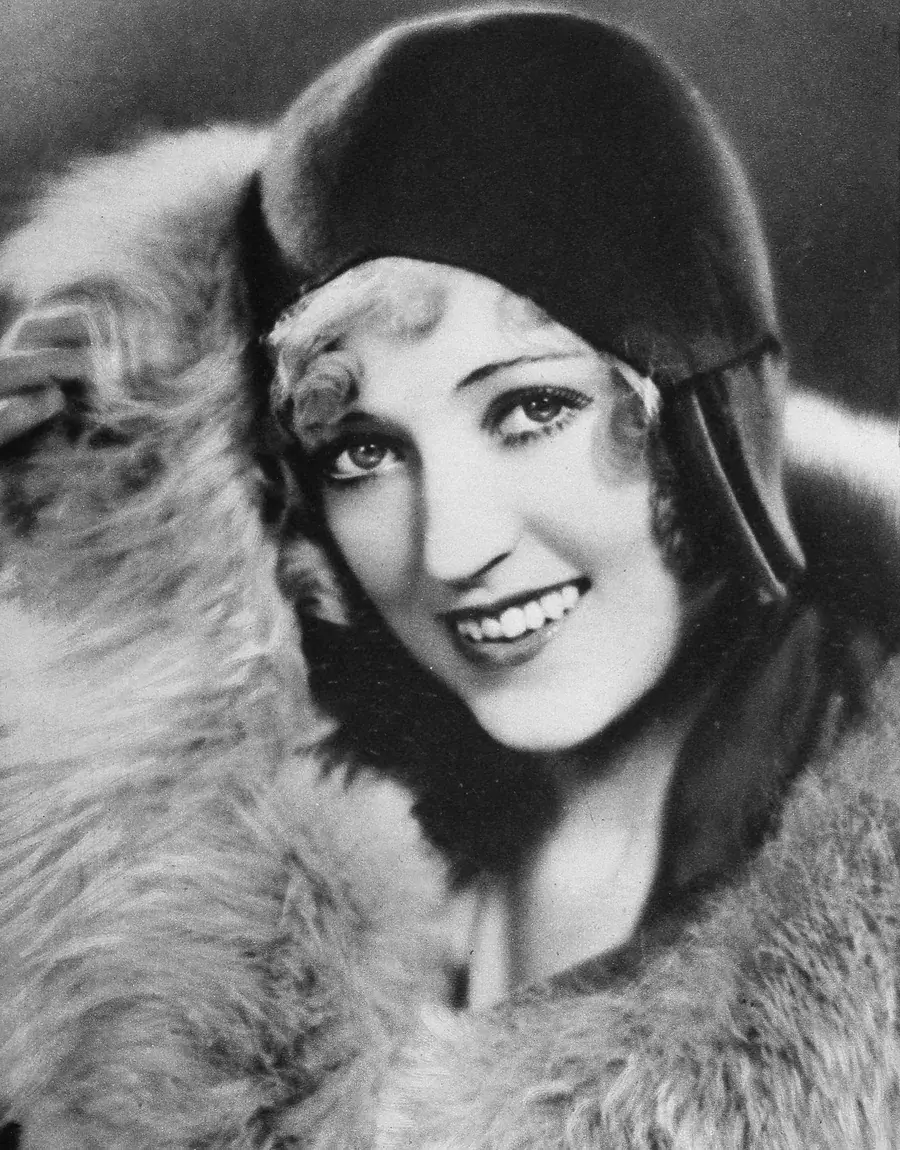
Before Hollywood knew Marion Davies, she was the youngest daughter of a Brooklyn family whose changed surname carried an immigrant story of its own.
Origins
The Brooklyn Douras Family
Long before Hollywood knew her as Marion Davies, the story began with an Irish immigrant household trying to turn hardship into permanence.[2] Her paternal grandparents, Daniel Doris and Catherine McCann, were born in Ulster between 1810 and 1818, part of the generation uprooted by the devastation of the Irish Potato Famine. In the 1840s they made their way to Manhattan, joining the crowded, improvisational world of immigrant New York, where survival depended on work, adaptability, and the stubborn belief that the city might eventually return what it demanded.
Before the screen legend came an immigrant family learning how to belong in New York.
Daniel worked as a porter and stevedore, the kind of physically demanding labour that underpinned the city but rarely entered polite histories. He gained citizenship in 1867, a milestone that marked more than paperwork: it signalled arrival, however partial, in a country that still treated the Irish as necessary and suspect in the same breath. The family moved through addresses that now read almost like a compressed map of the immigrant experience itself: Hester Street, Elizabeth Street, Division Street, and Oliver Street.
Out of that world came their son Bernard J. Doris, born in New York in 1853. Somewhere in the passage from first-generation struggle to second-generation ambition, the spelling shifted and hardened into Douras. Bernard was the man who settled it, in adulthood rather than childhood — the exact year is not documented, but he is recorded under the new form as he built his professional life. More than that, he converted it into a name that could travel upward. He became a lawyer and, later, a New York City magistrate during Prohibition, earning a reputation for the kind of droll pronouncements from the bench that made him a recognisable public figure. In him, the family story turned from dockside labour to civic authority, and the name Douras became both an inheritance and a reinvention.
Reinvention
Becoming Davies
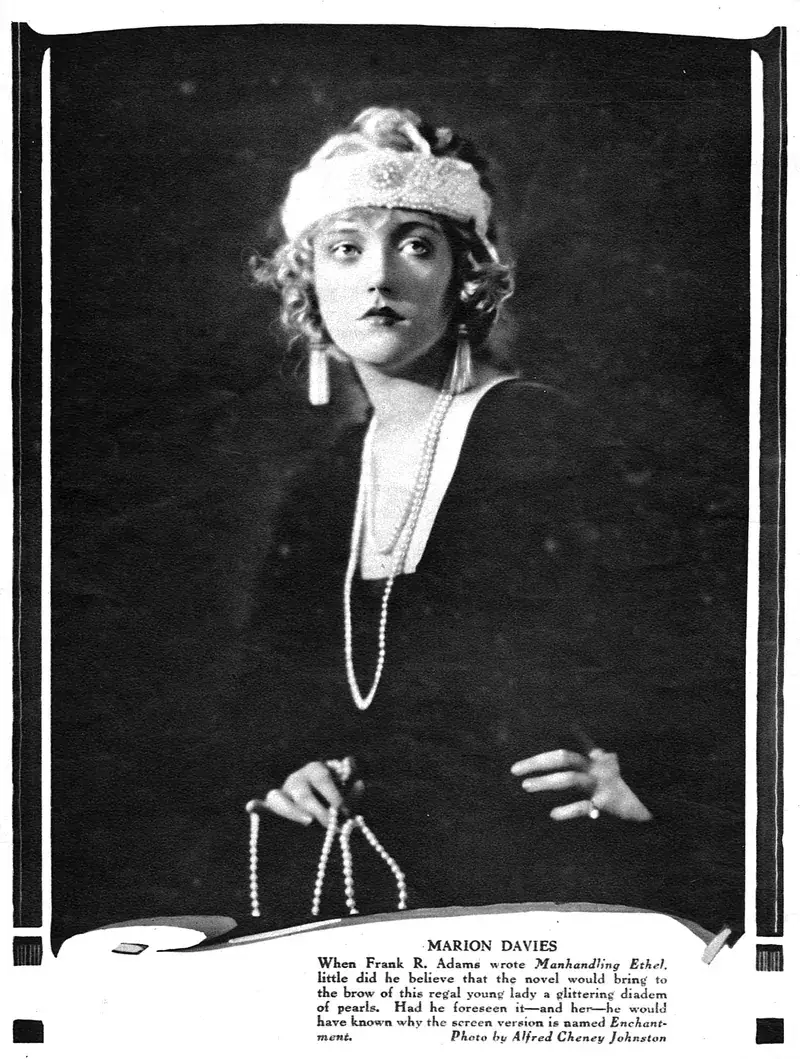
Marion Cecilia Douras was born in Brooklyn on 3 January 1897, the youngest of five children, into a family already fluent in the art of self-transformation. By the time she came of age, the Douras household understood that names mattered in America not just as markers of family, but as instruments of access. The choice to abandon Douras was not accidental or cosmetic. It was strategic, shaped by the ambitions of the sisters themselves — Marion, Rose, Reine, and Ethel — and encouraged by their mother, Rose Reilly.
The change from Douras to Davies was a calculation about how America rewarded certain kinds of names.
New York liked to describe itself as a melting pot, yet its upper reaches still carried a clear pecking order of ethnicity, accent, and belonging. Anti-Irish sentiment had not vanished simply because the city had become more crowded and more cosmopolitan. In drawing rooms, clubs, and social circles where refinement was endlessly performed, an Irish surname could still function as a barrier. The sisters knew that performance extended to the marquee as surely as it did to society columns.
So they chose something that sounded smoother, lighter, and less encumbered by old prejudices. The name "Davies," Welsh in origin, reportedly came from a neighbourhood billboard advertising the J. Clarence Davies real estate firm in Manhattan. It was practical, memorable, and sufficiently respectable. In one glance at a signboard, the family found a new public identity. Marion would carry that chosen name to a level of fame the Douras family could scarcely have imagined, even while the buried original remained the key to understanding where she came from.
Ascent
Broadway to Hollywood
Under her new name, Marion advanced with startling speed. She began as a chorus girl, but it did not take long for audiences to notice that she had more than beauty and poise. She had timing, spontaneity, and a lively comic intelligence that gave her performances an ease many of her contemporaries lacked. Her appearance in the Ziegfeld Follies of 1916 placed her inside the most glittering machinery of American theatrical fame, where glamour was manufactured nightly and where the most camera-ready performers could leap almost overnight into another league.
Marion’s natural strength was sparkle; Hollywood often demanded grandeur.
In 1916, at nineteen, she met William Randolph Hearst, the fifty-three-year-old newspaper magnate whose fascination with her would shape the rest of her career. Hearst did not merely promote her. He reorganised industrial scale resources around her, founding Cosmopolitan Pictures specifically to produce her films. That kind of patronage was both extraordinary and constraining. It made her a star, but it also wrapped her career in someone else's taste, someone else's anxieties, and someone else's vision of what her stardom should look like.
By 1924 she was the number one female box office star in America, appearing in films such as When Knighthood Was in Flower and Little Old New York, the latter especially resonant given its Irish-inflected themes and the family history behind her public name. Yet film historians have long argued that Hearst's interference blunted her greatest strength. He repeatedly steered her toward heavy costume dramas and prestige epics when her real gift lay in light comedy. The result is one of the central ironies of her career: Marion Davies became one of the era's biggest stars while still being, in some important sense, miscast by the system built to glorify her.
Family Reach
The Douras Legacy in Entertainment
Marion's fame can make the rest of the family disappear from view, but the Douras imprint on American entertainment extended well beyond a single star. Her sister Reine Davies became a well-known actress in her own right, proof that theatrical ambition ran through the household rather than settling on one extraordinary sibling by chance. The family's talent for navigating performance, publicity, and reinvention did not stop with the first generation to enter show business.
The Douras name left the marquee, but the family’s creative influence continued.
That continuity is especially clear in the next generation. Marion's nephew Charles Lederer, Reine's son, became one of Hollywood's most successful screenwriters, contributing to the sharp, sophisticated storytelling that helped define studio-era wit. Through him, the family's artistic presence moved from the stage and silent screen into the architecture of dialogue itself.
Even the family's memorial geography tells part of the story. Arthur Lake, who married Patricia Van Cleve, is interred in the Douras family mausoleum at Hollywood Forever Cemetery.[4] Van Cleve was publicly presented as Marion's niece; late in life she and her husband stated that she was in fact the biological daughter of Marion and Hearst. That claim is widely repeated but has never been documentarily established, and it is recorded here as a claim rather than a fact. It is a striking image: the public name Davies achieving immortality in popular culture, while the original family name remains inscribed in stone, anchoring the lineage back to the people who crossed oceans, changed spellings, and built the conditions that made such celebrity possible.
Afterlives
Philanthropy and Legacy
To reduce Marion Davies to a tabloid romance or a filmography is to miss the scale of her social presence. She was one of the premier hostesses of the Jazz Age, presiding over legendary gatherings at Hearst Castle and her Santa Monica Beach House with a style that made opulence seem playful rather than merely intimidating. Those parties became part of American cultural mythology, but they also reflected something fundamental in her appeal: she could make spectacle feel human.
Her legacy endured in film, philanthropy and the institutions that remember her.
Beyond the glamour, she gave substantial time and money to philanthropy, including the establishment of the Marion Davies Foundation to fight childhood diseases. Public remembrance followed in official as well as popular forms. She received a star on the Hollywood Walk of Fame in the Motion Pictures category on 8 February 1960 at 6326 Hollywood Boulevard,[3] a civic inscription of a celebrity that had once seemed impossible for a girl born Marion Cecilia Douras in Brooklyn.
She died in Los Angeles on 22 September 1961. By then, the public knew her almost entirely as Marion Davies, but the longer view restores the richer story. Hers was not simply the life of a movie star. It was the culmination of an immigrant family narrative shaped by famine, reinvention, upward mobility, ethnic calculation, and creative endurance. To recover the name Douras is not to diminish Marion Davies. It is to see her more clearly.
A personal connection
Following Marion’s trail in California
A personal research note by Paul Douras.
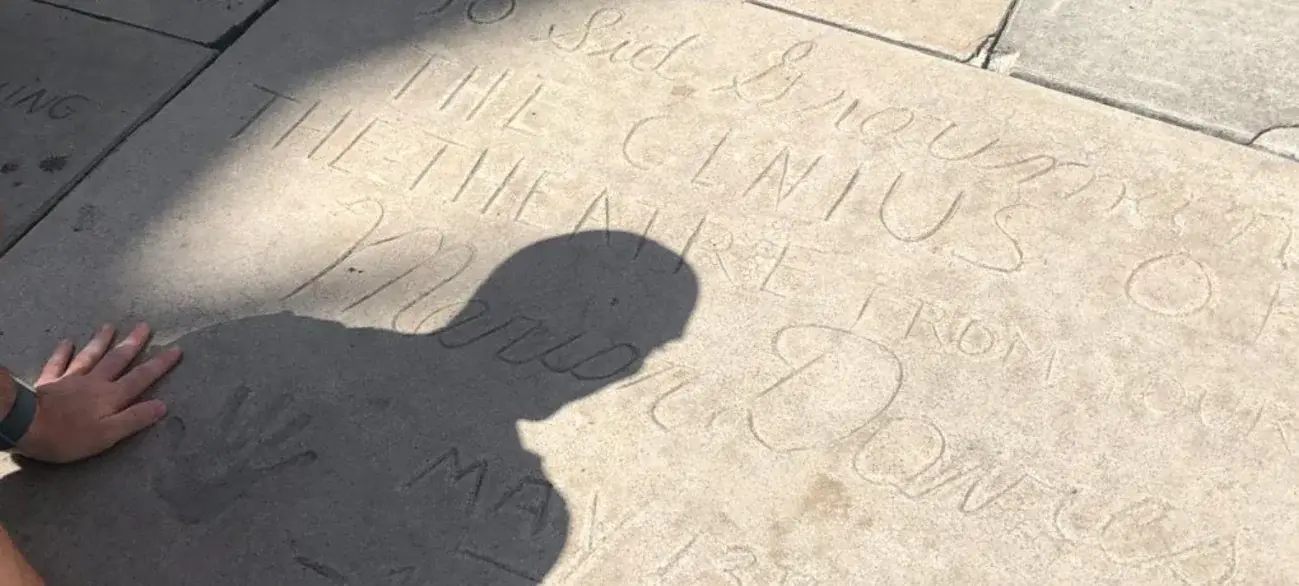
In 2019, I travelled to California and followed two physical traces of Marion’s life. At the Chinese Theatre in Hollywood, I found the forecourt slab she inscribed for the theatre’s founder, Sid Grauman. Placing my hand beside her writing turned an old Hollywood story into something unexpectedly immediate: the celebrated Davies name was there in concrete, while this project was trying to recover the Douras story behind it.
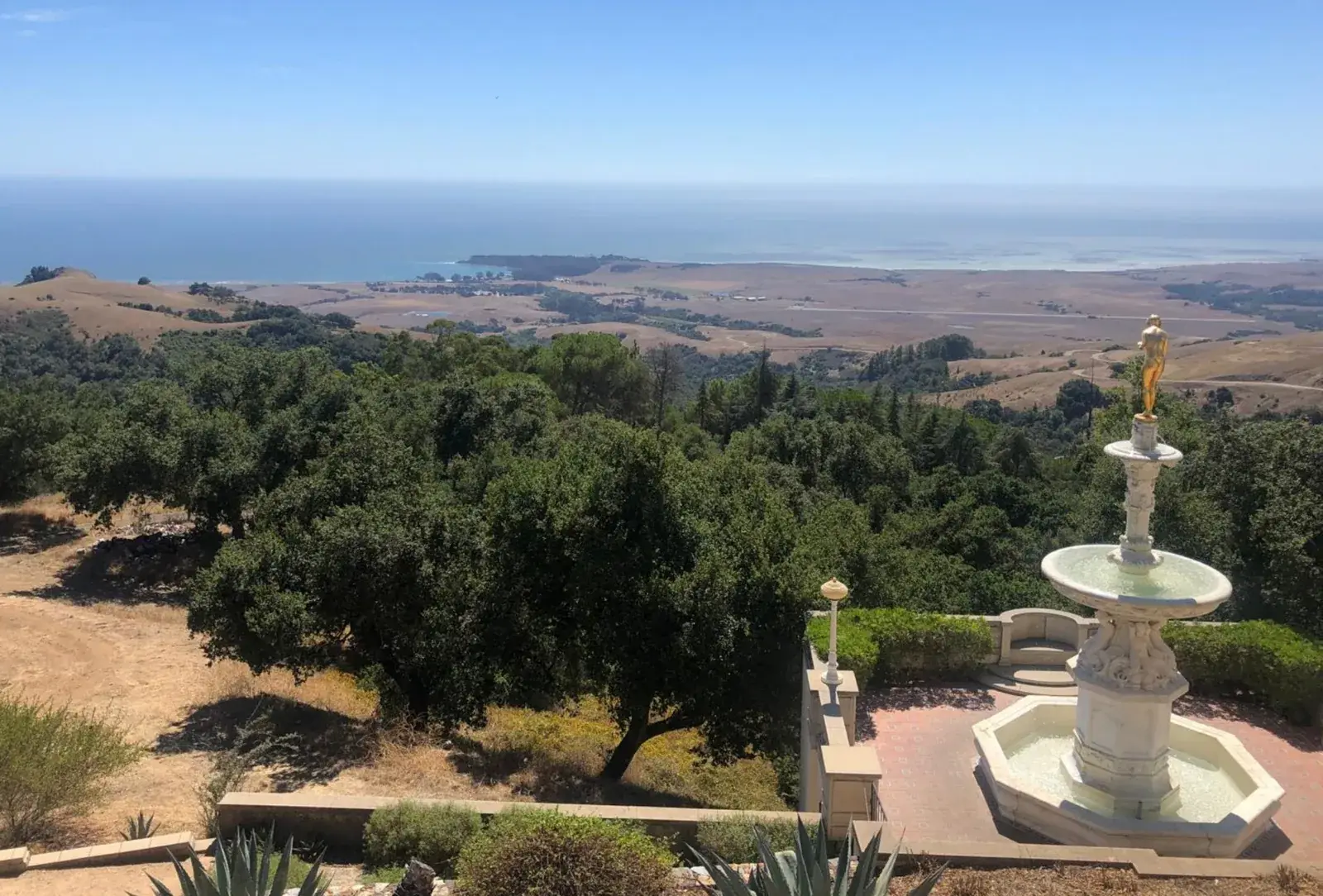
On the same trip I visited Hearst Castle at San Simeon, where Marion and William Randolph Hearst entertained many of the era’s best-known figures. The Neptune Pool, formal terraces and long view towards the Pacific made the scale of that world tangible. Yet the visit also sharpened the contrast at the heart of her story—from an Irish-American family in Brooklyn to one of the defining landscapes of Hollywood legend.
Family history becomes more vivid when the places and marks left behind can still be encountered in person.

References
Sources
Dates given here follow the sources listed below. Where accounts differ — particularly around the year Marion and Hearst first met — the text states the reading this site follows.
- Source 01 Encyclopaedia Britannica — Marion Davies — Birth name, dates, and career outline.
- Source 02 United States Federal Census and New York naturalisation records — Daniel Doris’s occupations, the family’s Lower East Side addresses, and his citizenship in 1867.
- Source 03 Hollywood Walk of Fame — Star in the Motion Pictures category, 6326 Hollywood Boulevard, dedicated 8 February 1960.
- Source 04 Hollywood Forever Cemetery — Location of the Douras family mausoleum.
- Source 05 Wikimedia Commons — Marion Davies by Alfred Cheney Johnston — 1921 portrait, published in Screenland; public domain in the United States.
- Source 06 Wikimedia Commons — Marion Davies, Emerald Green — 1930 Screenland portrait; public domain in the United States because copyright was not renewed.